
ALFA
- Fire-resistant, explosion-resistant and radiation-shielding equipment
- Protecting What Matters Most
- 20+ years in safety engineering
Testing
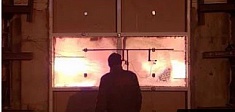
BOPVZU fire resistance test EIW-60
Fire resistance test of the BOPVZU explosion-retardant partitionhttp://youtu.be/AQajgLybSKA
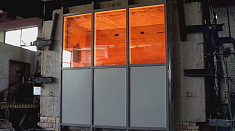
Tests of the E-60 fire-fighting facade system
Tests of the fire-fighting facade system E-60, rack-rigel with remote mounts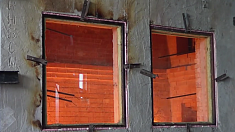
Tests of the protective glazing for E 60
On April 18, 2015, the safety glass was successfully tested for the E 60 parameter. Time to destruction, 72 minutes.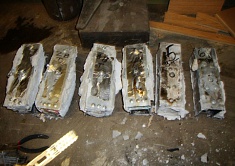
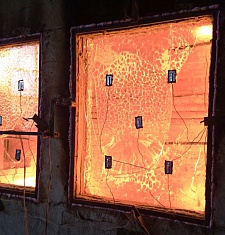
Tests of fire-resistant glass E-60/IW-45
March 3, 2015. Successful tests of fire-resistant glass manufactured by our company E-60/IW-45.
Video report of fire-resistant glass test at E-60/IW-45.
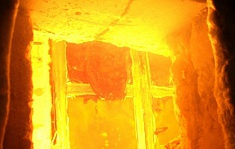
Fire profile test fragment
Fire-fighting test fragment - glass flows and aluminum is stable!
* According to the established aluminium translucent structure with a wall thickness of 1.2 mm. (glass melting temperature 960 GRS, the usual melting temperature of aluminum 660 GRS).
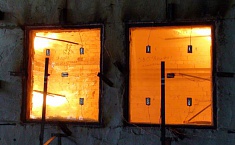
EIW-15 glass test
EIW-15 glass test, Tula region, 15 May 2014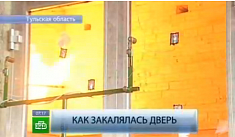
Tests of the door of the fire-fighting translucent double-field DPO 2 -30
Tests of the door of the fire-fighting translucent double-field DPO 2-30, declared fire resistance EIW 30 Donskoy, Tula region, March 2014 in the presence of correspondents of the NTV channel.
Profile – “SIAL”, Glass – “Brandglass”, fittings – “WALA”.
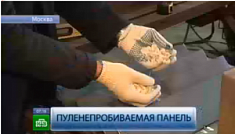
Testing of fire-resistant doors for compliance with EIW-30 standard
On the territory of our enterprise on March 14, 2014, NTV broadcaster filmed a story about bulletproof doors and conducted real-time shooting tests of the fire door for compliance with the EIW-30 standard. >>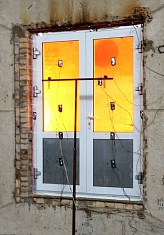
Additional test Doors of double-field DPO2-60
Additional test Door double-field DPO2-60, declared fire resistance EIW-60 (Donskoy, October 2013), 62 minutes.
SIAL profile, Brand Glass, Walla loops.
All our products are subjected to rigorous testing in accordance with the strict requirements of the Ministry of Emergency Situations of Russia.
See the section "Certificates"
In order for a structure or barrier to be considered fire-fighting, i.e. corresponding to the technical regulations on fire safety requirements, one must pass fire resistance tests in accordance with GOST R 53308-2009.
A company that intends to produce such designs produces several samples and tests them in an accredited laboratory. Guest 53308-2009 describes test method
The essence of which is to determine the time (in minutes) from the onset of unilateral thermal impact on the test sample to the occurrence of one of the normalized limit states of the structure for fire resistance in accordance with this standard.
When testing a prototype, the following limit states are distinguished:
- Loss of integrity (E) due to:
- the appearance of a stable flame on the unheated surface of the prototype with a duration of 10 seconds or more; i.e. the barrier burned out, the fire spread into the room - the end of the tests;
- ignition or the occurrence of smoldering with the glow of a cotton swab as a result of fire or hot gases penetrating through cracks, cracks, holes, porches - there may not be an open flame, but the temperature penetrating through the barrier is able to ignite clothing, or elements of decoration in the protected room. To determine this limiting state, the test engineer, with a piece of cotton wool on a long stick, walks around the test structure and points with a stick in all, in his opinion, dangerous places until this cotton swab lights up;
- formation in the design of a sample of through holes (slits) with dimensions that allow a probe with a diameter of (6 ± 2) mm to fit and move along the hole (slits) at a distance of at least 150 mm, or a probe with a diameter of (25 ± 2) mm to penetrate freely into the through holes. The length of the probes shall be at least 500 mm;
- loss of the canvas (canvases) of the prototype from the box or the box itself from the standard enclosing structure;
-
Loss of thermal insulating capacity (I) due to an increase in the temperature on the unheated surface of the test piece by an average of more than 140 °C, or at any controlled point of this surface by 180 °C compared with the temperature of the structure before the test, or the achievement of a temperature of 300 °C on the test piece box regardless of the temperature of the structure before the test.
This addition was introduced in 2008, the meaning of it is that if the temperature can be 1000 degrees on the surface of the sample heated during testing, it cannot rise above 160 grams on the protected surface, because in a fire a person probably will not be happy if he touches something with the temperature of a hot pan.
- Loss of thermal insulating capacity W due to the achievement of the permissible value of the density of the thermal radiation flux equal to 3.5 kW per square meter. The easiest way to explain it can be compared with the effect of burning a tree under a beam of light from a magnifying glass. The introduction of this parameter also led to an increase in the cost of fire protection structures. If earlier the glass had only to maintain integrity, which was handled by a thick triplex or glass reinforced with wire, now the glass was obliged to become cloudy when exposed to temperature and lose transparency.
- Smoke resistance - parameter S - relevant for doors and gates. The ability to block the spread of combustion products. For partition Test methods do not yet exist.
- Loss of bearing capacity.RWhen testing the structure for fire resistance, it is also affected by a certain load in accordance with the declared. This is usually used for floor slabs, walls, supports but can also be used for elements of hinged facades.
After you have tested the design, representatives of the test center come to your production to conduct inspections to assess whether the structures you produce for sale will match the sample that has successfully passed the tests. If everything is fine, you receive a certificate of compliance of your products with the declared items of the technical regulations of fire safety and can produce before the first fire.